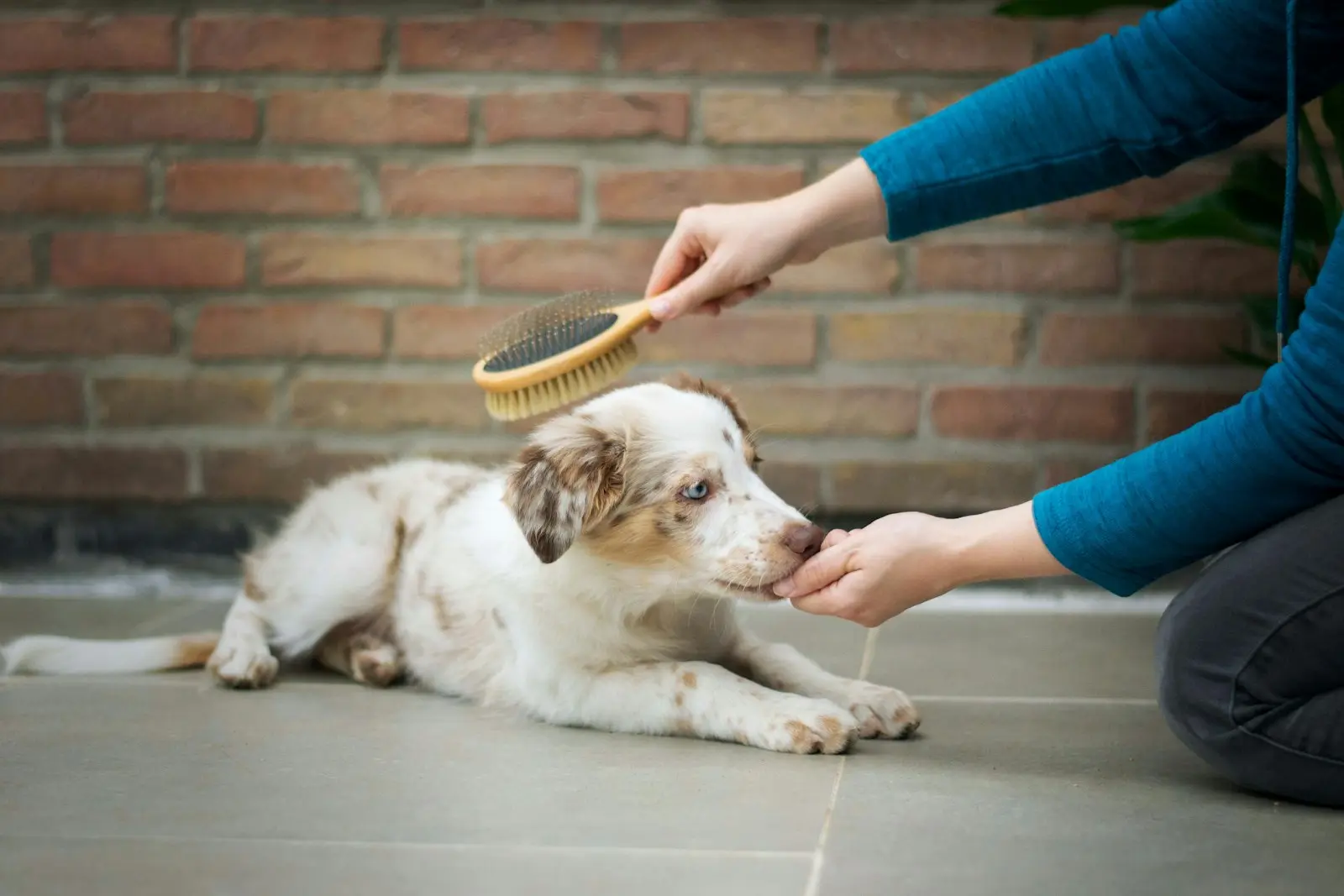
Many pet owners view grooming as purely cosmetic – something done to make their pet look good. However, regular grooming is essential for your pet's overall health and well-being. Proper grooming prevents numerous health problems and allows us to detect potential issues early.
We approach each grooming session as a comprehensive health assessment, checking for skin conditions, parasites, lumps, and other health concerns. This holistic approach ensures your pet not only looks great but stays healthy too.
Health benefits of regular grooming
Regular grooming sessions allow us to monitor your pet's health closely and catch problems before they become serious. Many health issues first appear in the skin, coat, or nails.
Skin and coat health
Grooming removes dead hair and dander, distributes natural skin oils, prevents matting and tangles, and reduces shedding around the home. It also improves skin circulation and comfort in all weather, and allows early detection of hot spots, allergy flare-ups, parasites, and skin tumors.
Nail care and paw health
Regular nail trimming prevents overgrowth and cracking, maintains a proper walking gait, reduces joint stress, and prevents nail bed infections. Paw checks during grooming remove debris and allergens, catch pad injuries, and check for foreign bodies lodged between the toes.
Dental health connection
Teeth brushing and a dental check during grooming sessions help with early detection of dental disease and tartar removal. Good oral hygiene reduces the risk of periodontal disease, which is linked to heart and kidney disease if left untreated.
Breed-specific grooming needs
Different breeds have unique grooming requirements based on their coat type, skin sensitivity, and breed standards. Our experienced groomers understand these specific needs.
Short-coated breeds (Labrador, Beagle, Boxer)
- Weekly brushing to remove loose hair
- Bathing every 6–8 weeks
- Nail trimming every 3–4 weeks
- Focus on skin health and parasites
Long-coated breeds (Golden Retriever, Shih Tzu)
- Daily brushing to prevent mats
- Professional grooming every 6–8 weeks
- Regular trims and de-matting
- Focus on coat conditioning
Double-coated breeds (Husky, German Shepherd)
- Seasonal shedding management
- Professional de-shedding treatments
- Bathing during shedding season
- Weekly brushing year-round
Cats (all breeds)
- Gentle grooming to reduce hairballs
- Nail trimming every 2–3 weeks
- Bathing only when necessary
- Focus on dental care in a stress-free environment
Our professional grooming services
Our grooming services combine professional care with health monitoring. Each session includes breed-appropriate bathing and blow-drying, brush-out and de-matting, nail trimming, ear cleaning, and teeth brushing, alongside a health assessment covering skin and coat, parasites, dental health, and body condition.
We also offer specialized services such as medicated baths for skin conditions, hypoallergenic grooming, flea treatment baths, and gentler, shorter sessions with mobility assistance for senior pets.
How often should you groom your pet?
Grooming frequency depends on your pet's breed, lifestyle, coat type, and health needs. We help establish the right schedule for your individual pet.
| Coat type | Professional grooming | Home brushing | Nail trimming |
|---|---|---|---|
| Short hair | Every 8–12 weeks | 2–3 times/week | Every 3–4 weeks |
| Medium hair | Every 6–8 weeks | Daily | Every 3–4 weeks |
| Long hair | Every 4–6 weeks | Daily | Every 2–3 weeks |
Coat length, activity level, skin conditions or allergies, the season, and age all affect how often your pet needs grooming.
Home grooming between professional sessions
While professional grooming is essential, daily home care helps maintain your pet's health and extends the time between professional sessions.
Daily care
- Brush the coat according to breed needs
- Check ears for redness or odor
- Inspect skin for parasites or issues
- Monitor for unusual lumps or bumps
Weekly maintenance
- Nail trimming or grinding
- Teeth brushing with pet toothpaste
- Full body inspection
- Ear cleaning if needed
Grooming as preventive healthcare
Regular grooming sessions serve as health check-ups, allowing us to identify and address health issues before they become serious problems. During grooming, we check for skin tumors or unusual growths, parasite infestations, skin infections or allergies, dental disease progression, and ear or nail problems, and refer you on for veterinary examination, dental procedures, allergy testing, or surgery when needed.
Grooming isn't just about appearance – it's about comprehensive health care. Our groomers work closely with our veterinary team to ensure every grooming session contributes to your pet's overall health and well-being.